
前一篇的 Operator 已經能建立、更新 Deployment 和 Service,也能補回被刪除的資源。不過,ResourcesApplied 只表示設定已提交。Todo API 換了 image 後,新 Pod 可能拉取失敗,舊 Pod 卻仍能回應請求,不能因此認定這次更新成功。
今天在既有的 reconcile 加入健康判斷,確認新版副本與 Service endpoint,再將結果寫回 CR。資源建立與所有權檢查沿用原本的做法,服務團隊仍只提供 image、port。
health(deployment, slices, pods, image) 接收目前的 Deployment、EndpointSlice、受管 Pod 與目標 image,回傳 ready、stalled、reason、message。它只判斷傳入的資料,不直接呼叫 API Server;以下兩段是這個函式內依序執行的程式。
先確認 Deployment controller 已觀察目前的設定,再找出目標 image 的 Pod 是否有啟動錯誤,或 rollout 是否長時間沒有進展:
status = deployment.get("status", {})
if status.get("observedGeneration", 0) < deployment["metadata"]["generation"]:
    return False, False, "Reconciling", "Deployment controller has not observed this version"
for pod in pods:
    for container in pod.get("spec", {}).get("containers", []):
        if container["image"] != image:
            continue
        for observed in pod.get("status", {}).get("containerStatuses", []):
            if observed["name"] != container["name"]:
                continue
            waiting = observed.get("state", {}).get("waiting", {})
            if waiting.get("reason") in {
                "ErrImagePull", "ImagePullBackOff", "InvalidImageName",
                "CrashLoopBackOff", "CreateContainerConfigError",
            }:
                return False, True, waiting["reason"], "Inspect managed Pod events and logs"
if any(condition.get("type") == "Progressing"
       and condition.get("status") == "False"
       and condition.get("reason") == "ProgressDeadlineExceeded"
       for condition in status.get("conditions", [])):
    return False, True, "ProgressDeadlineExceeded", "Deployment rollout exceeded its deadline"
例如新 Pod 回報 ImagePullBackOff,函式就回傳 ready=False、stalled=True,並留下錯誤原因。舊 Pod 即使仍可用,也不能抵銷新版的錯誤。ProgressDeadlineExceeded 則沿用 Deployment 的進度判斷;平台設定的 progressDeadlineSeconds: 120 不是從提交 CR 起算的固定部署時限,也不會自動 rollback。
沒有看到明確阻礙後,接著檢查新版副本與 endpoint:
replicas = deployment["spec"]["replicas"]
complete = all(status.get(key, 0) == replicas for key in
               ("replicas", "updatedReplicas", "readyReplicas", "availableReplicas"))
pod_uids = {pod["metadata"]["uid"] for pod in pods
            if any(container["image"] == image
                   for container in pod.get("spec", {}).get("containers", []))}
endpoints = any(endpoint.get("conditions", {}).get("ready") is True
                and endpoint.get("addresses")
                and endpoint.get("targetRef", {}).get("uid") in pod_uids
                for item in slices for endpoint in (item.get("endpoints") or []))
if complete and endpoints:
    return True, False, "RolloutComplete", "All updated replicas and Service endpoints are ready"
return False, False, "RolloutPending", "Waiting for updated replicas and ready Service endpoints"
Todo API 的目標是兩個副本,replicas、updatedReplicas、readyReplicas、availableReplicas 都要是 2。這樣不只確認有可用副本,也確認副本已更新成目前的 Pod template,沒有把仍在服務的舊副本算成新版成功。
EndpointSlice 還要至少有一個具備位址、ready: true 的 endpoint,且 targetRef.uid 對應到目標 image 的受管 Pod。副本檢查與 endpoint 檢查都通過,才回報就緒;否則繼續等待。這項判斷不會呼叫業務 API,也不保證資料一致性或外部 Ingress 正常。
health 的結果交給 make_status,產生 Ready、Stalled 兩筆 condition,以及概括處理階段的 phase:
| 觀察結果 | Ready |
Stalled |
phase |
|---|---|---|---|
| 尚未完成更新,沒有明確錯誤 | False |
False |
Progressing |
| 新版副本就緒,且有符合條件的 endpoint | True |
False |
Ready |
| image/啟動錯誤,或 rollout 超過進度期限 | False |
True |
Failed |
下面的 Json 是 dict[str, Any] 的型別別名,datetime、timezone 來自 Python 標準函式庫。make_status 將這次判斷與 CR generation 一起放進回報內容:
def make_status(cr: Json, ready: bool, stalled: bool, reason: str,
                message: str, managed: bool) -> Json:
    generation = cr["metadata"]["generation"]
    previous = {item["type"]: item for item in cr.get("status", {}).get("conditions", [])}
    conditions = []
    for kind, value in (("Ready", ready), ("Stalled", stalled)):
        state = "True" if value else "False"
        old = previous.get(kind, {})
        transition = old.get("lastTransitionTime") if old.get("status") == state else None
        conditions.append({
            "type": kind, "status": state, "observedGeneration": generation,
            "reason": reason, "message": message,
            "lastTransitionTime": transition or datetime.now(timezone.utc).isoformat(
                timespec="seconds").replace("+00:00", "Z"),
        })
    name = cr["metadata"]["name"]
    return {
        "phase": "Ready" if ready else "Failed" if stalled else "Progressing",
        "observedGeneration": generation, "conditions": conditions,
        "managedResources": {"deployment": name, "service": name} if managed else {},
    }
Ready=False 不一定是失敗;要一起看 Stalled 與 reason,才能分辨仍在等待,還是需要排查。Stalled=True 也不表示 Operator 停止處理,修正 image 後仍會再次觀察。condition 的 status 沒變時,程式保留原本的 lastTransitionTime,不會每次檢查都刷新。
結果必須對應目前設定。CR 的 metadata.generation、status.observedGeneration 與 condition 的 observedGeneration 要一致,否則 Ready=True 可能是上一版留下的。Deployment 的 generation 則由它自己的 controller 觀察,不能和 CR 的 generation 互相比數字。
CRD 的 status schema 也要允許 conditions 與其中的欄位,API Server 才會保留回報。report 寫入前會再確認 CR 的 UID、generation 與刪除狀態,略過過期結果,並以 resourceVersion 保護寫入。這些 conditions 保存的是現況,不是每次更新的事件歷史。
兩次 ensure 完成後,Operator 重新讀取 Deployment,以 CR UID label 查詢受管 Pod,再取得同名 Service 的 EndpointSlice。Operator 需要相應的讀取權限,API 錯誤仍由既有錯誤處理記錄並重試。取得資料後,reconcile 呼叫健康判斷與回報:
ready, stalled, reason, message = health(deployment, slices, pods, cr["spec"]["image"])
report(cr, logger, ready=ready, stalled=stalled, reason=reason,
       message=message, managed=True)
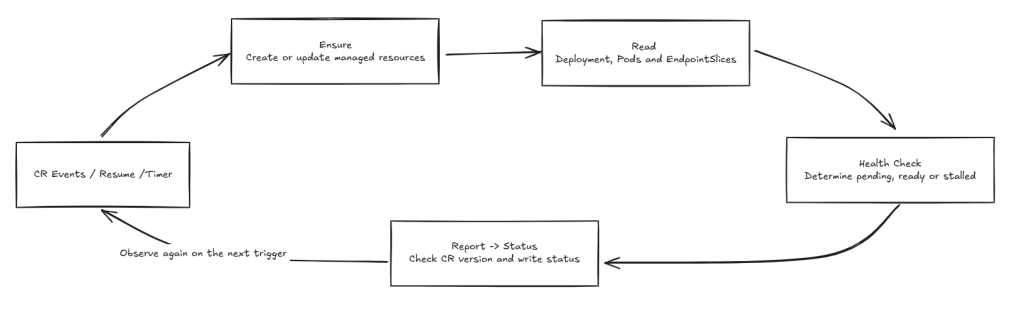
一次 reconcile 不會一直等到 rollout 完成。它回報當下的觀察結果,再由 CR 事件、resume 或每十秒的 timer 觸發下一次處理。資源提交、健康判斷與回寫的關係如下:
載入健康回報版本並更新 CRD schema 後,可以用以下指令查看 generation、conditions 與原因。若仍只有 ResourcesApplied,應先確認 Operator 版本與 schema,不能當成健康判斷已執行:
kubectl get microservice todo-api -n todo -o yaml
下圖將查詢結果整理成欄位:CR 與兩筆 condition 的 generation 都是 12,回報 Ready=True、Stalled=False,原因為 RolloutComplete;Deployment 的兩個副本也都已更新並就緒。

下一篇用 Backstage 表單收集 digest,產生 Microservice 設定;服務名稱、Namespace、port 與 image repository 由模板固定,開發者不用每次手寫 CR。



 iThome鐵人賽
 看影片追技術